
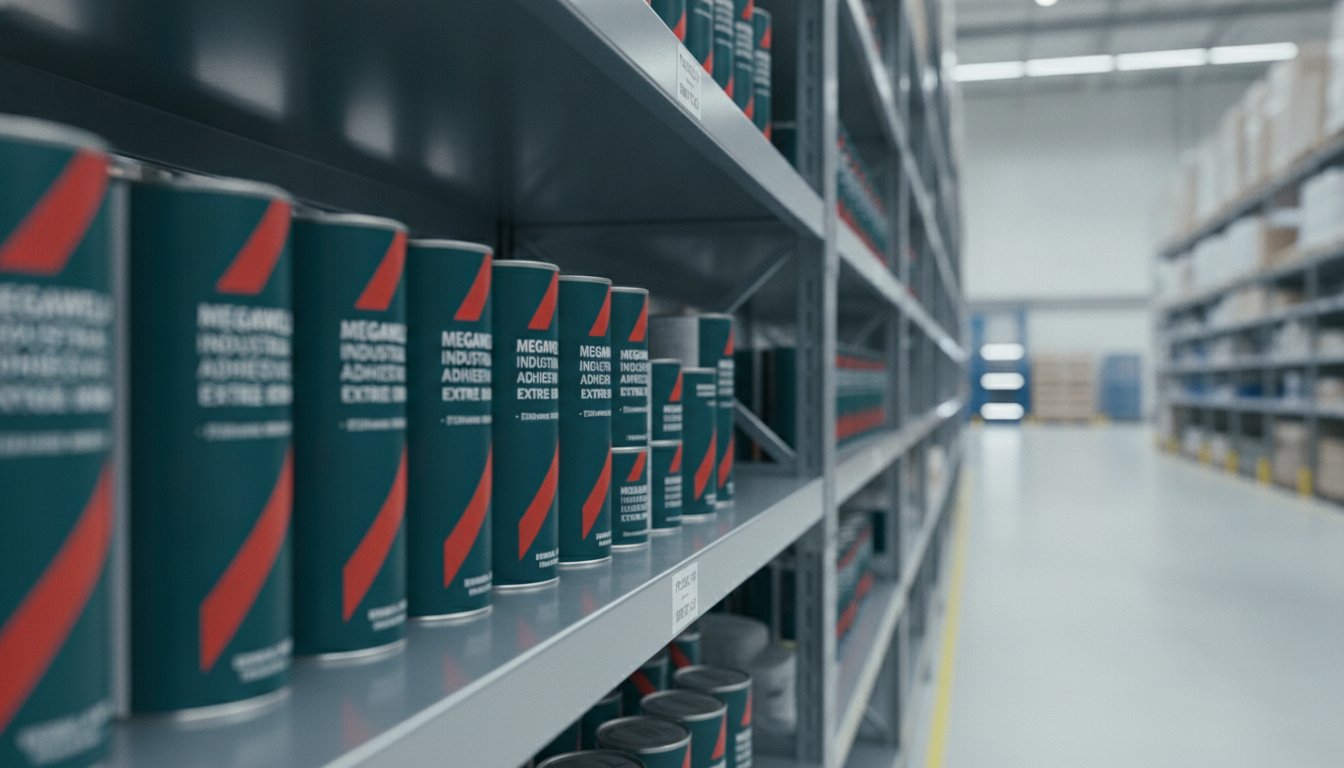
A single batch of degraded adhesive can compromise the structural integrity of an entire production run, leading to catastrophic bond failure and expensive rework. For engineers and production managers, the uncertainty of whether a stored component will perform as expected is a significant operational risk. You likely recognise the frustration of discovering wasted stock that has cured prematurely or finding that batch-to-batch performance varies despite identical application methods.
Adhering to formal adhesive shelf life standards is not merely a matter of compliance; it’s a fundamental requirement for maintaining the chemical stability and mechanical properties of your materials. This article provides a clear technical framework for understanding ASTM D1337 and ISO protocols, ensuring your inventory remains viable. You’ll learn how to implement a reliable first-in, first-out rotation system and establish the environmental controls necessary to prevent degradation. By following these professional storage best practices, you can proceed with the confidence that every bond will meet its specified design strength.
Key Takeaways
- Understand how adhesive shelf life standards define the precise window during which a product maintains its original chemical and physical properties.
- Learn to use ASTM D1337 protocols to monitor viscosity changes, which serve as a primary indicator of material aging and performance loss.
- Identify why maintaining stable temperature and humidity levels is the most effective way to prevent premature curing and inconsistent bond results.
- Establish a robust inventory rotation system that uses batch numbers and delivery logs to ensure the oldest stock is used first.
- Gain the confidence to consult with technical specialists to validate that your storage centre and application methods align with manufacturer requirements.
For expert advice on implementing professional storage protocols in your facility, please get in touch with our technical advisors.
Understanding Adhesive Shelf Life Standards and Industry Regulations
Shelf life is the specific duration during which an adhesive material maintains its intended chemical stability and physical performance characteristics. Following adhesive shelf life standards ensures that the product delivers consistent results from the moment it is manufactured until it is applied. Adhering to manufacturer-specified storage conditions is not optional; it is a prerequisite for validating product warranties and ensuring performance in critical applications. In industrial settings, Adhesive shelf life is determined by the manufacturer through rigorous testing of the material in its liquid state.
To better understand the practical implications of storage on chemical stability, watch this helpful video below.
UK businesses operating in structural sectors rely on adhesive shelf life standards to mitigate liability risks. If a bond fails in a load-bearing application, the first point of investigation is often the storage and handling history of the adhesive components. The Technical Data Sheet (TDS) serves as your primary reference for longevity. It provides the precise temperature ranges and environmental conditions required to preserve the material. Ignoring these values can lead to premature curing or a significant reduction in final bond strength.
The Difference Between Shelf Life and Service Life
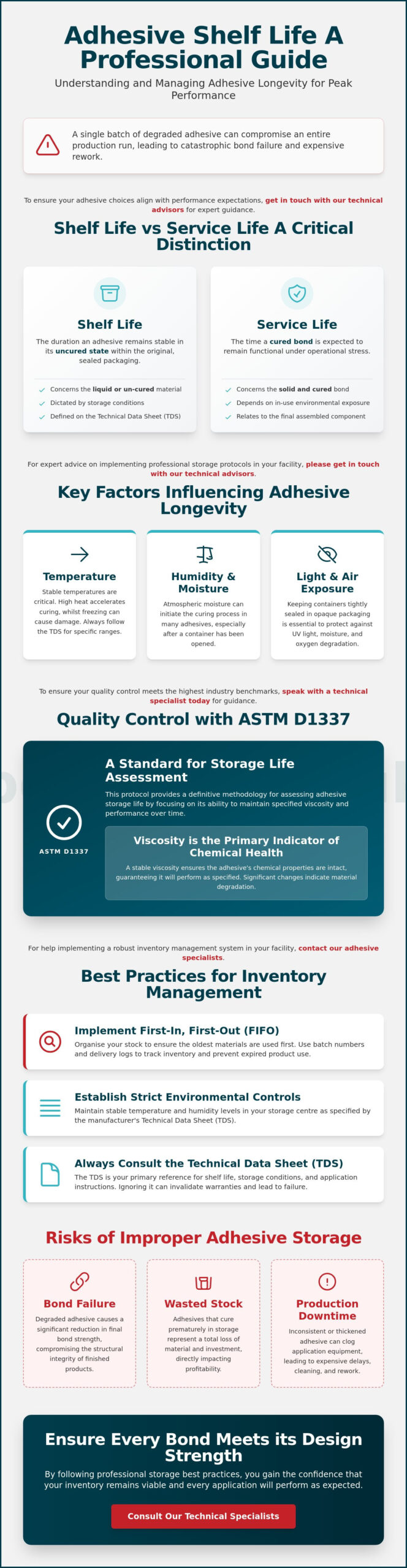
It is vital to distinguish between shelf life and service life to avoid confusion during the design phase. Shelf life refers exclusively to the stability of the adhesive in its liquid or uncured state within the original packaging. In contrast, service life is the duration for which the cured bond is expected to remain functional under environmental stress. Whilst a product reaching its expiry date does not always result in immediate failure, it signifies that the chemical properties may have drifted outside of specified tolerances. Once a container is opened, the remaining usable life often decreases rapidly due to exposure to atmospheric moisture and oxygen.
Why Formal Standards Matter for Quality Assurance
Implementing formal standards for adhesive management is a core component of a robust ISO 9001 quality management system. Following these recognised protocols reduces the risk of costly production downtime caused by clogged hot melt adhesive and guns or inconsistent curing of structural resins. By standardising storage across multiple production sites, manufacturers ensure that every batch performs identically. This level of precision is what separates high-performance industrial operations from those prone to unexpected technical failures.
To ensure your facility meets these rigorous technical requirements, please speak with a technical specialist today for guidance on your specific application.
The Role of ASTM D1337 in Adhesive Quality Control
The ASTM D1337 Standard provides the definitive methodology for assessing the storage life of adhesives. This protocol moves beyond simple calendar dates by focusing on the material’s ability to maintain its specified viscosity and mechanical performance over time. By following these adhesive shelf life standards, manufacturers can determine exactly how long a product can be stored without compromising its final bond integrity. Professional suppliers use these benchmarks to verify batch quality before dispatch, ensuring that every container of structural methacrylates or epoxies arrives with its technical properties fully intact.
Viscosity is the most sensitive indicator of a material’s chemical health. If an adhesive thickens significantly whilst in storage, it typically indicates that the polymerisation process has already started. Conversely, a loss of viscosity can suggest the breakdown of molecular chains or the evaporation of essential solvents. These shifts aren’t just aesthetic; they directly impact how the adhesive flows into substrates and wets the surface. If a material doesn’t behave as expected during application, consult with our technical team to prevent potential bond failure in your project.
Measuring Viscosity and Bond Strength Over Time
Testing requires comparing samples from an aged batch against a fresh control group under identical environmental conditions. If the viscosity has drifted beyond the tolerances defined in the Technical Data Sheet, the chemical composition is no longer stable. Whilst viscosity is a useful proxy, bond strength is the final arbiter of quality. A product is only deemed fit for purpose if it can still achieve the required lap shear or peel strength values specified in the original design documentation.
Identifying Signs of Chemical Degradation
Visual cues often provide the first warning of material failure. You should look for phase separation, where the chemical components begin to unbind, or discolouration that suggests oxidation has occurred. Skinning on the liquid surface is a clear sign of moisture ingress, particularly in moisture-cure products. Strong odour changes, such as a pungent acidic smell, often indicate that the internal stabilisers are no longer effective. Polymerisation can occur prematurely if stabilisers fail over time, resulting in a solidified material that is impossible to dispense or apply correctly.
If you require a site-specific assessment of your chemical storage environment, please contact our technical department for a professional consultation.
Factors That Influence Adhesive Longevity and Performance
Temperature stability is the most critical variable in preserving chemical adhesives. Most industrial formulations rely on a delicate balance of resins, hardeners, and stabilisers that remain dormant until application. When ambient temperatures rise above the recommended storage range, typically 15°C to 25°C, the kinetic energy within the mixture increases. This accelerates slow-burn chemical reactions, effectively shortening the usable life of the product. Adhering to adhesive shelf life standards requires a controlled climate where fluctuations are minimised, as repeated thermal cycling can cause premature aging even if the maximum temperature is not exceeded.
Moisture ingress poses a terminal risk for moisture-cure products such as polyurethanes and silicones. Even a microscopic amount of humidity entering a poorly sealed container can trigger the curing process, leading to skinning or complete solidification. UV light exposure is equally damaging; it can degrade the polymer chains within certain plastic containers, making them brittle and prone to cracking. This compromise in container integrity allows atmospheric contaminants to enter. You must never transfer industrial adhesives to secondary vessels, as original packaging is specifically engineered for chemical compatibility and moisture resistance.
Environmental Impact on Chemical Stability
High heat does more than just thicken a product; it can permanently alter the molecular structure, leading to reduced bond strength. Conversely, water-based adhesives face significant risks from freezing. If the temperature drops below 0°C, the emulsion can break, causing permanent separation that cannot be reversed by stirring. In UK warehouses, managing the dew point is essential to prevent condensation from forming inside partially used containers. If warm, moist air is trapped inside a cold drum, the resulting water droplets will contaminate the batch and likely cause application failure.
Material Specific Storage Requirements
Different chemical families demand distinct storage protocols to maintain their integrity. For instance, cyanoacrylate superglue adhesives generally benefit from refrigeration at 2°C to 8°C to extend their shelf life, provided they are allowed to reach room temperature before the seal is broken. In contrast, structural methacrylates and epoxies must be monitored for crystallisation if stored in cold conditions; if crystals form, the material must be carefully warmed according to technical data sheet instructions. For contact adhesives, the primary concern is solvent loss. Ensuring lids are hermetically sealed after every use prevents the evaporation of volatile organic compounds, which would otherwise lead to skinning and an unworkable increase in viscosity.
If you require assistance in developing a standard operating procedure for your inventory management, please contact our technical support team for professional guidance.
Best Practices for Managing Industrial Adhesive Inventory
Managing inventory effectively requires more than just a shelf in a warehouse. You must establish a dedicated adhesive storage centre that is physically isolated from direct heat sources, such as radiators or heavy production machinery. This separation is a core requirement of modern adhesive shelf life standards, as it prevents localised hot spots that can cause a single container to degrade significantly faster than the rest of the batch. By creating a stable environment, you ensure that the chemical properties of the material remain within the manufacturer’s specified tolerances.
Accuracy in record-keeping is paramount for maintaining quality control. You should maintain detailed logs that record batch numbers, delivery dates, and the exact date the seal was first broken on each container. This level of traceability allows you to identify trends in material performance and provides a clear audit trail if a technical failure occurs on the production line. Regular visual inspections of the stock should be scheduled monthly to check for signs of container bulging, leakage, or any physical changes in the material that might suggest a loss of integrity.
Training your floor staff on the correct way to seal containers immediately after use is a simple yet effective way to preserve material integrity. Many moisture-sensitive products, such as certain polyurethane adhesives, can be ruined by just a few minutes of unnecessary exposure to atmospheric humidity. If you need to verify the compatibility of your current storage setup with specific chemical families, consult with our technical specialists to ensure your facility meets professional standards.
Implementing a First In First Out Rotation System
Implementing a First In First Out (FIFO) rotation system is the most reliable method for ensuring that no product exceeds its expiry date. This system requires that the oldest stock is always positioned at the front of the shelf for immediate use. Clear labelling techniques, such as using high-visibility stickers that display the arrival date in large text, make it easy for staff to follow the protocol without confusion. By strictly adhering to a FIFO system, you reduce chemical waste and ensure that the adhesive performance remains consistent across every production run.
Monitoring Temperature and Humidity in the Warehouse
In the variable climate of a UK warehouse, passive storage is rarely sufficient for high-performance chemicals. You should use digital hygrometers and thermometers to track environmental fluctuations in real-time, as these tools provide the data necessary to adjust heating or ventilation systems. For highly sensitive products, climate-controlled cabinets offer a superior level of protection against the damp and cold conditions often found in industrial units. The ideal storage temperature for most industrial adhesives is between 15 and 25 degrees Celsius. Monitoring these values ensures that your facility remains compliant with the technical requirements specified on the product data sheets.
To discuss your specific manufacturing requirements or to request technical documentation for your quality audit, please speak with our expert technical team.
Maintaining Bond Integrity with Bondrite Adhesives
Bondrite Adhesives Ltd operates with a fundamental commitment to technical precision and material reliability. We prioritise rapid stock turnover to ensure that every product delivered to your facility has the maximum possible remaining usable life. By strictly adhering to adhesive shelf life standards within our own warehousing operations, we eliminate the risks associated with aged or degraded chemicals. Sourcing from a specialist UK supplier provides the assurance that your materials comply with local industrial regulations and safety standards, whilst also reducing the transit times that can lead to environmental exposure during shipping.
Accessing accurate technical data is essential for any professional application. We provide comprehensive technical data sheets (TDS) and safety documentation for all our products, ranging from anaerobic thread-locking adhesives to complex structural resins. This transparency allows your engineering team to validate storage requirements and application parameters long before the first bond is made. Consulting with our technical specialists during the project design phase ensures that the chosen adhesive is perfectly matched to the substrate and environmental conditions of the final application, preventing failures before they can occur.
Technical Support for High Performance Applications
Our role extends beyond material supply; we act as a technical partner for your manufacturing challenges. We provide expert guidance on industrial adhesives uk standards to help you maintain bond integrity in demanding environments. If you encounter inconsistent performance or suspect issues related to material aging, our team can help troubleshoot your storage environment or application process. Professional advice is particularly critical when using anaerobic adhesive technology. These materials require specific handling because their curing reaction is triggered by the absence of oxygen and the presence of metal ions, making them highly sensitive to container contamination.
Sourcing Fresh Adhesives for Critical Projects
We avoid holding excessive quantities of aged stock, which guarantees that our clients receive materials with the highest degree of chemical stability. This lean approach to inventory management, supported by our efficient national delivery service, allows you to maintain lower stock levels on-site without risking production delays. Whether you are selecting high-performance plastic adhesives for automotive components or structural epoxies for engineering applications, you can do so with the confidence of full technical backing. By following adhesive shelf life standards and sourcing from a dedicated specialist, you ensure that your bonds perform to their maximum design potential every time. This diligent approach protects your reputation and ensures the long-term durability of your finished products.
For expert assistance in establishing a compliant storage environment, please get in touch with our technical advisors.
Securing Long Term Bond Reliability Through Technical Precision
Maintaining bond integrity requires a methodical approach to material management. By aligning your facility with formal adhesive shelf life standards, you mitigate the risks of premature chemical ageing and structural failure. Success depends on the rigorous implementation of First-In, First-Out (FIFO) protocols and the precise monitoring of warehouse temperatures. These steps ensure that every batch of adhesive retains its specified viscosity and mechanical properties. It’s vital to treat storage as a critical part of the engineering process rather than a mere logistics concern.
Sourcing from Bondrite Adhesives Ltd guarantees access to fresh stock through our rapid inventory turnover and full compliance with industrial performance standards. If you require technical data sheets or specific storage advice for your application, please contact our adhesive specialists. Our UK-based technical team is ready to provide the professional guidance needed to protect your manufacturing integrity and ensure your stored materials perform exactly as designed.
Frequently Asked Questions
How long do industrial adhesives typically last on the shelf
Most industrial adhesives have a shelf life of 6 to 12 months when stored in unopened containers at recommended temperatures. Specific formulations, such as cyanoacrylates, may have shorter windows of 6 months, whilst certain epoxies can remain stable for up to 24 months. You must always refer to the Technical Data Sheet for the exact duration specified by the manufacturer for that particular chemical family.
Can I use an adhesive if it has passed its expiry date
You should avoid using adhesives that have exceeded their expiry date in any critical or load-bearing application. Whilst the material might still appear liquid, its chemical properties may have drifted, resulting in reduced bond strength or inconsistent curing times. Using expired stock often voids manufacturer warranties and significantly increases the risk of catastrophic bond failure during the service life of the finished product.
What is the ASTM D1337 standard for adhesive storage
ASTM D1337 is the formal technical protocol used to determine the storage life of adhesives by monitoring changes in viscosity and bond strength over time. This standard provides the baseline for establishing adhesive shelf life standards across the industry. It ensures that manufacturers can accurately predict how environmental factors, such as temperature and humidity, will impact the material’s performance during its stated life.
Should I store all my adhesives in a refrigerator to extend their life
No, you must only refrigerate adhesives if the manufacturer explicitly recommends it on the Technical Data Sheet. Whilst refrigeration extends the life of cyanoacrylates, it can cause other materials, like certain epoxies, to crystallise or separate permanently. If you do refrigerate products, they must reach room temperature before you break the seal to prevent moisture condensation from contaminating the adhesive batch.
How does humidity affect the shelf life of cyanoacrylate superglues
Humidity acts as the catalyst for the polymerisation of cyanoacrylates, meaning high moisture levels will cause the adhesive to cure inside the bottle. Even microscopic amounts of water vapour entering an opened container will significantly reduce its usable life. You must keep these containers hermetically sealed and store them in low-humidity environments to maintain their chemical stability and ensure consistent performance.
What are the most common signs that an adhesive has gone bad
The most common indicators of degradation include a noticeable increase in viscosity, phase separation, or the formation of a skin on the surface. You should also check for discolouration or a change in odour, which often suggests that internal stabilisers have failed. If the material feels stringy, lumpy, or unusually thick during application, it is no longer fit for professional use.
How does opening a container change the remaining shelf life
Opening a container introduces atmospheric oxygen and moisture, which immediately begins to degrade the chemical stabilisers within the formulation. For many industrial products, the shelf life drops from several months to just weeks or even days once the original seal is broken. You should only open containers when you are ready to apply the material and ensure they are resealed immediately after use.
Why is a FIFO system important for adhesive inventory management
A First-In, First-Out (FIFO) system ensures that the oldest batches are consumed before they reach their technical expiry. This practice is essential for maintaining adhesive shelf life standards within your facility and preventing the accumulation of degraded stock. Implementing a robust FIFO system reduces chemical waste and guarantees that your production line uses materials with consistent curing and performance characteristics.

Article by
Lucy Mackay
Lucy Mackay is a Director at Bondrite Adhesives Ltd, an ISO 9001-certified industrial supplier based in Loughborough. With a focus on customer-led solutions and technical reliability, Lucy manages the strategic direction of the business, which has been a staple of the UK adhesive industry since 2002.
Disclaimer
This article is intended for informational purposes only. Please ensure you seek expert advice or carry out your own research to confirm the information is suitable for your specific needs.
Related Industrial Adhesives & Sealants
If you liked this guide then you may also like the following: