
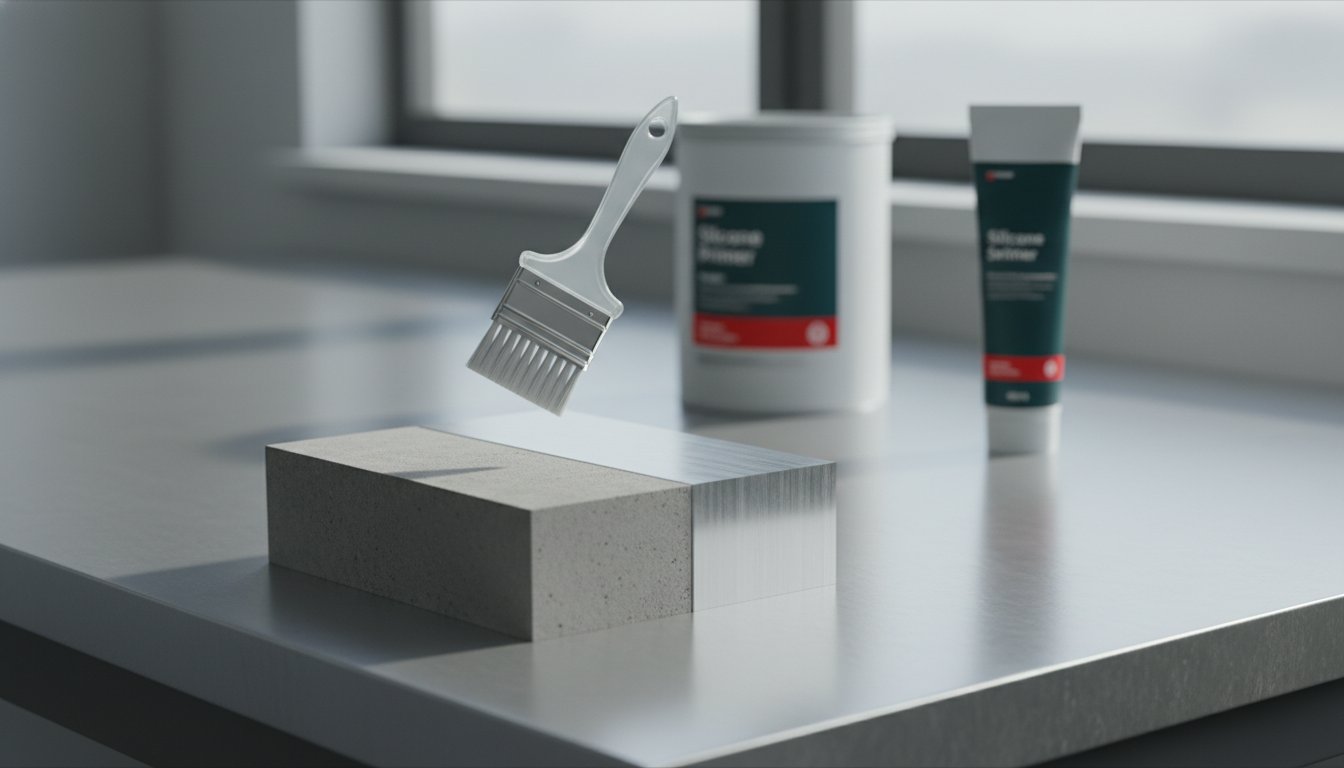
Why does high-specification silicone often peel away from a substrate within weeks, despite the sealant itself remaining perfectly flexible? It’s a persistent challenge for engineers and skilled tradespeople when a joint fails because of poor edge adhesion. You likely recognise that even the most advanced sealants cannot overcome a surface with low surface energy or residual contaminants. Using a dedicated primer for silicone sealant is not a luxury; it’s a technical necessity for ensuring a permanent, waterproof bond that withstands structural movement.
This article provides a technical overview of how to select and apply the correct primer for your specific substrate. You’ll discover how to match chemical formulations to materials such as porous concrete or non-porous metals, effectively reducing the risk of moisture ingress and costly rework. We will also cover the essential application protocols required to meet professional standards, including those outlined in ASTM C920-18(2024). By the end of this guide, you will have the clarity needed to achieve professional-grade adhesion on even the most challenging industrial surfaces.
Key Takeaways
- Understand how a primer for silicone sealant acts as a chemical bridge to increase surface energy and prevent adhesion failure on difficult substrates.
- Learn to distinguish between porous and non-porous materials to determine how pore structure influences primer consumption and bond integrity.
- Identify the correct chemical match between your sealant and the priming solution, whilst choosing between solvent based or water based formulations.
- Master professional application protocols, from mandatory cleaning steps to achieving the thin, uniform coat required for maximum bond strength.
- Minimise the risk of costly rework by sourcing specialist sealants and primers backed by technical expertise for industrial and commercial applications.
If you require technical assistance with material compatibility or primer selection, you can speak with our expert advisors for tailored guidance.
Understanding the Role of Primer for Silicone Sealant Applications
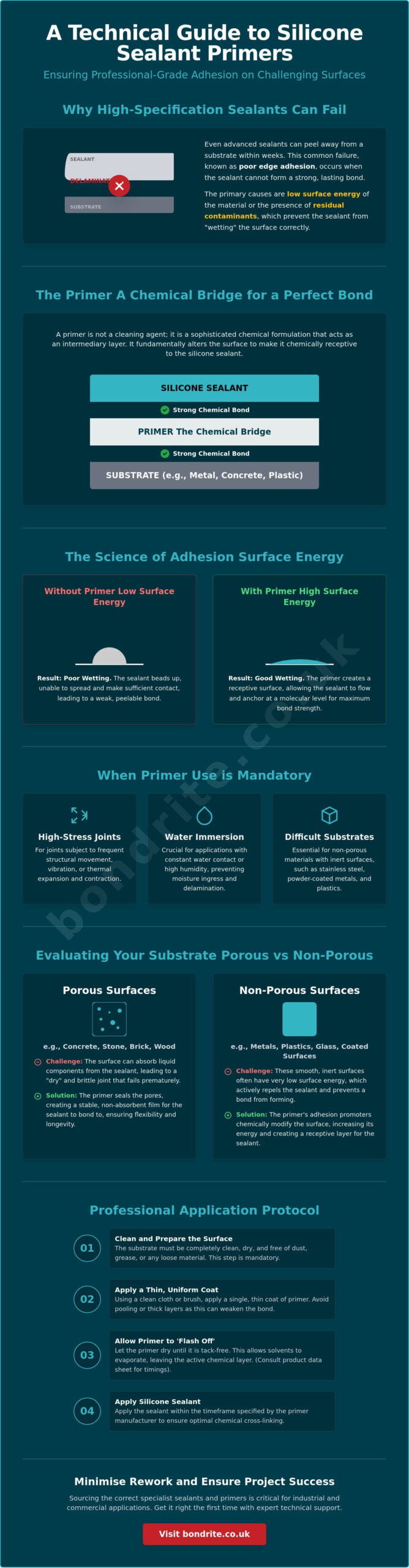
A Sealant relies on its ability to maintain a continuous bond with the substrate surface throughout its service life. In industrial environments, a primer for silicone sealant acts as a critical chemical bridge, providing a reactive layer that bonds both to the material surface and the silicone itself. Whilst some materials allow for natural adhesion, many technical substrates possess low surface energy, which causes the sealant to bead up rather than spreading out to form a bond. By applying a primer, you effectively increase the surface energy of the substrate, allowing the sealant to “wet” the surface completely.
This transition from simple mechanical interlocking to a robust chemical bond is what separates a professional installation from a domestic DIY project. In commercial settings, where joints are subject to vibration and chemical exposure, the margin for error is non-existent. Achieving a permanent bond requires more than just a clean surface; it demands a surface that is chemically receptive to the specific polymers within the silicone. Using a primer for silicone sealant ensures that the interface between the two materials is stable enough to withstand environmental and structural pressures.
To better understand the practical application of these chemical bridges, watch this technical demonstration:
The Science of Surface Energy and Adhesion
Wetting is the physical ability of a liquid to maintain contact with a solid surface. If the surface tension of the sealant is higher than the surface energy of the substrate, the bond will be weak and prone to peeling shortly after curing. Primers modify the molecular structure of the surface, creating a high energy environment that encourages the sealant to flow into microscopic irregularities. This ensures that the final cured state of the silicone is anchored at a molecular level, providing resistance against the shear forces often found in industrial joints. The chemical behaviour of the primer whilst curing creates a receptive interface that welcomes the silicone polymers, ensuring they don’t just sit on top of the material but integrate with the surface.
When is a Primer Absolutely Essential?
Certain conditions make the use of a primer mandatory to avoid catastrophic failure. High stress joints that experience frequent thermal expansion or structural movement require the maximum possible bond strength to maintain integrity. If your project involves constant water immersion or high humidity, such as in marine or industrial wash-down areas, a primer prevents moisture from creeping behind the sealant edge. This moisture ingress is a primary cause of delamination. Additionally, materials like powder coated aluminium, stainless steel, and specific plastics like polypropylene naturally reject silicone due to their inert surfaces. In these cases, the primer provides the necessary adhesion promoters to ensure the joint remains intact even under extreme environmental pressure.
To ensure your project meets specific safety and performance standards, please contact our technical support team for professional advice.
Evaluating Substrates for Proper Silicone Adhesion
Identifying the substrate is the first step in any professional sealing operation. Materials are generally categorised as either porous or non-porous, a distinction that dictates how the primer for silicone sealant will behave. Porous materials, such as stone or concrete, have an open structure that draws liquids deep into the surface. If you don’t account for this, the substrate may absorb the liquid components of the sealant. This leads to a “dry” joint that lacks flexibility and fails prematurely because the polymer matrix has been depleted of its essential oils.
You can verify surface porosity by performing a simple water drop test. Place a few drops of clean water onto the surface; if the water is absorbed within a few minutes, the material is porous. If the water beads on the surface, you are likely dealing with a non-porous material or a surface that has been treated with a repellent coating. This distinction is vital because it influences the volume of primer required. High porosity substrates often require a more generous application to ensure the surface is fully saturated and sealed before the silicone is applied.
Modern UK manufacturing frequently uses composite materials, which present unique challenges for adhesion. These materials often combine different polymers and reinforcements, resulting in inconsistent surface energy across the joint. In such cases, following Pecora’s adhesion and primer guidelines can provide a structured approach to testing compatibility. If you are unsure about a specific composite, consulting with a technical advisor is the safest way to prevent delamination and ensure long term durability.
Porous Surfaces and the Need for Pore Sealing
Concrete, brick, and unglazed ceramics are naturally thirsty materials. When you apply a primer for silicone sealant to these surfaces, it fills the microscopic voids and creates a uniform, non-absorbent layer. This prevents the substrate from wicking the silicone oil out of the sealant, which would otherwise cause the bead to shrink and crack. Priming porous surfaces also helps to lock in interstitial air. Without this seal, air bubbles can escape from the substrate as temperatures rise, creating unsightly and structurally weak voids in the curing silicone.
Non Porous Materials and Chemical Bonding
Metals like stainless steel and aluminium, along with glass and certain plastics, offer no mechanical “key” for a sealant to grip. These surfaces require a chemical bridge to achieve adhesion. Professional washprimers are often used on metalwork to etch the surface at a molecular level, creating a reactive layer that bonds aggressively to the silicone. This layer also serves a secondary purpose by sealing the metal against moisture, which prevents corrosion from forming at the bond line. For industrial metalwork adhesives and sealing projects, this chemical preparation is the only way to guarantee a bond that survives long term exposure to the elements.
If you require a technical data sheet or need to confirm the chemical compatibility of a specific batch, please contact our technical department for professional assistance.
Selecting the Correct Primer Chemistry for Your Project
Selecting a primer for silicone sealant involves more than simply choosing a brand. It requires a technical assessment of how the primer’s active ingredients will interact with the sealant’s cure system. Using an incompatible combination can result in poor cross-linking, which leads to a bond that feels tacky or fails to reach full strength. Professionals must always consult the Technical Data Sheet (TDS) for both products to confirm they are designed to work in tandem. This methodical approach is the only way to ensure the integrity of the joint in demanding environments.
The distinction between solvent based and water based primers is often driven by the specific requirements of the site. Solvent based systems are prized for their speed, as they evaporate quickly to leave a reactive resin film on the substrate. Conversely, water based primers are becoming more prevalent due to a general industry trend toward low VOC formulations. By June 2026, many traditional silicone components will be more tightly regulated under REACH amendments, making the selection of modern, compliant priming systems even more critical for long term project viability. Sourcing these products from a specialist supplier like Bondrite Adhesives Ltd ensures that you receive a formulation designed for industrial durability.
Solvent Based Primers vs Universal Washprimers
Solvent based primers offer significant advantages in high speed production lines. They flash off within minutes, leaving a thin film of adhesion promoters ready for the sealant. Universal washprimers are often the preferred choice for multi material assemblies, such as glass to metal joints, as they provide a consistent reactive layer across different surfaces. When using high VOC solvent primers, you must follow strict safety protocols. This includes the use of appropriate respiratory protection and ensuring adequate ventilation within the workspace to manage solvent vapours effectively.
Specialist Primers for Plastics and Metals
Certain materials, particularly low energy plastics, require highly specialised primers to achieve a permanent bond. For example, caravan repair adhesives and sealants often encounter plastics that naturally resist bonding. These substrates demand a primer that can bite into the polymer surface to create a secure anchor point. Similarly, powder coated or anodised aluminium surfaces possess a stable oxide layer that must be treated with a specific metal primer to prevent delamination. For projects requiring both sealing and structural bonding, you may also wish to explore our plastic adhesives category to find compatible solutions for your specific material.
If you require specific application protocols for a high-volume manufacturing line, please get in touch with our technical team for a professional consultation.
Professional Application Techniques for Maximum Bond Strength
Precision during the application phase is the final safeguard against joint failure. Whilst previous sections have established the importance of chemical compatibility and substrate identification, the physical execution of the bond determines the ultimate service life of the joint. When you apply a primer for silicone sealant, you are creating a reactive interface that must be free from any physical or chemical interference. If the substrate is not prepared to an industrial standard, the primer will bond to surface contaminants instead of the material itself, leading to delamination shortly after the joint is put into service. Achieving a permanent bond requires a methodical, step by step approach that prioritises cleanliness and environmental control.
Surface Preparation and Cleaning Protocols
You must ensure the substrate is entirely free from dust, oil, grease, and moisture before the primer is introduced. It is vital to use specialist industrial degreasers or solvent cleaners designed for technical bonding. Don’t use household detergents or glass cleaners; these products often contain surfactants, silicones, or fragrances that leave behind a microscopic film. This residue acts as a release agent, preventing the primer from making molecular contact with the surface. This level of decontamination is particularly important in metalwork adhesives and sealing applications, where residual cutting oils or fingerprints can compromise the integrity of the entire joint.
Application Methods and Drying Times
The goal of priming is to achieve a thin, uniform film. A common error is applying the primer too heavily, which can lead to a weak, cohesive failure within the primer layer itself. For non-porous surfaces like glass or polished metal, a “wipe on, wipe off” method using a clean, lint free cloth is often the most effective way to ensure a consistent reactive layer. For porous substrates, such as concrete or timber, a high quality brush is preferred to ensure the liquid is worked into the microscopic voids of the material. Once applied, you must allow for the “flash off” time. This is the period required for the solvent carrier to evaporate completely, leaving only the active resins behind.
Environmental factors significantly influence drying behaviour. High humidity or low temperatures will extend the flash off time, whilst warm, dry conditions will accelerate it. You can verify the surface is ready by performing a visual and tactile check; the primer should appear as a continuous, dull or glossy film and must be completely tack free to the touch. Most professional primers offer an application window of between 30 minutes and 24 hours. If you wait too long and the window closes, the primer may lose its chemical reactivity, and the surface will need to be cleaned and primed again to ensure a successful bond.
To ensure your staff are using the most efficient application methods for your specific project requirements, speak with a Bondrite Adhesives Ltd specialist today for tailored technical advice.
For specific product recommendations or to discuss your project requirements, please reach out to our technical advisors for expert support.
Sourcing High Performance Sealants and Primers from Bondrite Adhesives Ltd
Bondrite Adhesives Ltd operates as more than a simple product vendor. We function as a technical partner for UK manufacturing and construction professionals who require certainty in their bonding outcomes. When you source a primer for silicone sealant alongside your chosen adhesive, you eliminate the risks associated with multi-brand chemical incompatibility. Our range of professional sealants and silicones is curated for industrial performance, ensuring that every component of the joint works in harmony to resist movement and environmental stress. Selecting the correct primer for silicone sealant from a specialist supplier is the most reliable way to prevent edge delamination in high specification joints.
Relying on a single expert source for both the priming and sealing stages of a project provides a clear path to success. It allows for a unified technical approach where the chemical properties of the primer are guaranteed to complement the cure system of the sealant. This reduces the administrative burden of managing multiple suppliers and ensures that the technical documentation is consistent across the entire application process. Our advisors are available to guide you through this selection to ensure your chosen materials meet the necessary performance standards.
Industrial Grade Solutions for UK Manufacturing
Our products are engineered for high demand sectors where failure is not an option. In the field of caravan repair adhesives, for example, the combination of vibration and thermal cycling requires materials that maintain flexibility whilst adhering to complex plastics and metals. A commitment to durability and quality is evident amongst all stocked products. To understand how these materials integrate into professional workflows across the country, you can consult our industrial adhesives uk guide.
Technical Support for Complex Bonding Challenges
The Bondrite Adhesives Ltd technical team provides the necessary clarity to prevent application failure before it occurs. We understand that every substrate and environment presents a unique set of challenges. Whether you are dealing with a new composite material or a high humidity installation, we offer direct access to safety data sheets and technical documentation. Maintaining professional standards in industrial sealing projects is a matter of precision and documented performance. We invite you to leverage our experience to ensure your next project achieves a permanent, reliable bond.
If you require specific technical documentation or advice on substrate preparation, please contact our specialist team for support.
Achieving Permanent Adhesion in Industrial Jointing
Ensuring the longevity of an industrial joint depends on the systematic elimination of variables. You have seen how identifying substrate porosity and matching chemical formulations are the foundations of bond integrity. By integrating a high performance primer for silicone sealant into your preparation workflow, you create a reactive bridge that prevents delamination and moisture ingress. Following strict application protocols, particularly regarding flash off times and decontamination, remains the only way to guarantee professional results that meet safety standards.
Bondrite Adhesives Ltd has operated as a specialist UK supplier since 2000, providing expert technical support for industrial bonding across various sectors. Our comprehensive range of professional sealants and primers ensures you have the correct solution for every technical challenge. For expert advice on selecting the right primer for your industrial application, please contact our technical team today. We look forward to helping you achieve a secure and durable bond.
Frequently Asked Questions
Do I need a primer for silicone on ceramic tiles?
Yes, whilst many silicones claim to be primerless, tiles in wet rooms or high traffic areas benefit significantly from a primer to prevent edge peeling over time. In industrial or commercial kitchen environments, a primer ensures the bond remains watertight despite frequent cleaning and thermal changes. This preparation is essential for maintaining the integrity of the joint against the constant use of harsh cleaning chemicals.
Can I use silicone primer on timber surfaces?
Yes, timber is a highly porous material that can suck the liquid components out of silicone sealant, leading to a brittle bond. Using a primer for silicone sealant designed for porous surfaces seals the wood grain and provides a stable base for the silicone to adhere to. This step is vital for external joinery where the wood is subject to constant moisture and temperature fluctuations.
How long does silicone primer take to dry?
Drying times vary depending on the chemical base of the primer and the ambient conditions, but most solvent based primers flash off within 10 to 60 minutes. It’s critical to wait until the primer is tack free before applying the sealant. You must also ensure the sealant is added before the active window closes, which is usually within 2 to 8 hours of application.
Is silicone primer the same as a general surface sealer?
No, a sealer is designed to prevent liquid penetration into a material, whereas a silicone primer is specifically formulated to create a reactive surface for the sealant to bond with. Using a standard sealer may actually prevent the silicone from sticking correctly. Primers provide the necessary adhesion promoters that a standard sealer lacks, ensuring a chemical rather than just a physical bond.
Can you paint over silicone primer?
No, silicone primers are designed specifically for silicone sealants, which are notoriously difficult to paint. The chemical properties of the primer are intended to bond with silicone polymers, which naturally reject most paints. If your project requires a painted finish, you should use a paintable hybrid polymer sealant and its corresponding primer rather than a traditional silicone system.
Why is my silicone sealant peeling off even after priming?
This usually occurs if the surface was not cleaned properly before the primer was applied, or if the primer was allowed to dry for too long. Contaminants like dust, moisture, or old silicone residue will prevent the primer for silicone sealant from bonding to the substrate. If the application window is missed, the primer loses its chemical reactivity and will no longer accept the sealant.
What happens if I skip the priming step on metal?
On non-porous metals like aluminium or stainless steel, the silicone might appear to stick initially but will likely fail when the joint undergoes thermal expansion. Priming prevents this by creating a chemical bond that is much stronger than simple surface adhesion. Without this reactive layer, the sealant will eventually pull away from the smooth metal surface as the structure moves or vibrates.
Does silicone primer work on low energy plastics?
Specialised primers are available for difficult plastics, but some materials like polypropylene or polyethylene are extremely resistant to bonding. In these cases, a standard primer will not suffice. You may need a specific plastic primer and a high performance adhesive from our professional range to achieve a secure bond. Always consult technical data sheets to confirm compatibility with specific low energy polymer substrates.

Article by
Lucy Mackay
Lucy Mackay is a Director at Bondrite Adhesives Ltd, an ISO 9001-certified industrial supplier based in Loughborough. With a focus on customer-led solutions and technical reliability, Lucy manages the strategic direction of the business, which has been a staple of the UK adhesive industry since 2002.
Disclaimer
This article is intended for informational purposes only. Please ensure you seek expert advice or carry out your own research to confirm the information is suitable for your specific needs.
Related Industrial Adhesives & Sealants
If you liked this guide then you may also like the following: