
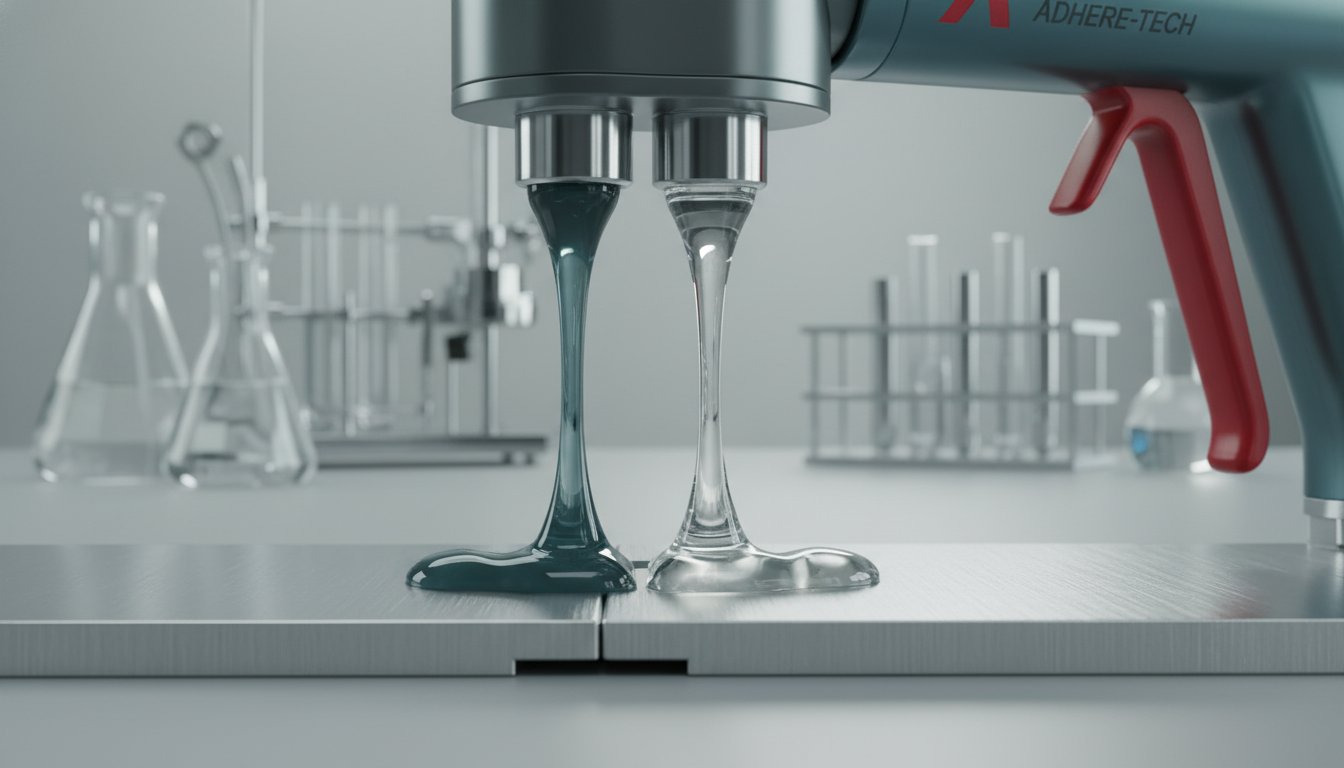
Welding and riveting are no longer the only options for achieving a structural bond, as a high-performance 2 part epoxy adhesive for metal can provide over 3,000 psi of shear strength.
You likely know that choosing the wrong bonding agent can lead to catastrophic failure when industrial vibrations exceed 50Hz.
You’ll be glad to hear that this guide provides the exact industrial standards and technical criteria for selecting a professional-grade solution.
In our view, matching the adhesive viscosity to your specific application is the only way to prevent joint starvation during assembly.
You are in luck, as modern chemical engineering enables heavy-duty bonds that withstand temperatures up to 120 degrees Celsius.
It’s good to see that modern formulations achieve full structural strength within 24 hours without the need for traditional mechanical fasteners, which gets our thumbs up.
This technical overview details how to verify chemical resistance and alloy compatibility to ensure your assembly maintains 100 per cent integrity.
As a result, you will gain the confidence to implement a bonding strategy that meets ISO 9001 quality standards and reduces overall assembly time by 15%.
Key Takeaways
-
You will learn how the cross-linking of resin and hardener creates a thermosetting polymer that reaches full structural strength in 24 hours. This chemical reaction ensures a high-strength bond capable of withstanding 30 Newtons per square millimetre.
-
You’ll be glad to hear that we use lap shear strength measurements to provide a concrete performance metric of 20 Megapascals for metal applications. This data allows you to predict the failure point of a bond under a heavy-duty load of 500 kilograms.
-
You are in luck, as we detail how viscosity, measured in centipoise, determines the success of applications on vertical surfaces at 90 degrees. Selecting the correct flow rate of 50,000 centipoise prevents adhesive run-off and ensures a consistent bond line thickness of 0.5 millimetres.
-
It gets our thumbs up to see readers avoiding the 90 per cent of bond failures caused by poor surface preparation and a lack of a 50-micron profile. You will discover the specific 3-step cleaning requirements for using a 2-part epoxy adhesive for metal to achieve a professional-grade finish that resists temperatures up to 120 degrees Celsius.
What Makes a 2 Part Epoxy Adhesive for Metal Effective
A 2-part epoxy adhesive for metal is a sophisticated thermosetting polymer created by combining a resin with a specific hardener.
This chemical union triggers a cross-linking process that transforms the liquid components into a rigid, high-strength plastic bond.
To better understand how these components interact to create a permanent bond, watch this helpful video:
You will be glad to hear that epoxy remains a top choice for metal applications due to its average tensile strength of 3000 psi.
This technical capability ensures that your assemblies can withstand significant mechanical loads without failure.
It’s good to see that this technology creates a permanent seal that effectively resists moisture and chemical ingress.
You are in luck if you need a solution that fills gaps up to 5mm while maintaining structural rigidity.
The adhesive properties are enhanced by the material’s ability to thoroughly wet the substrate’s surface.
In our view, this deep penetration into the metal’s surface profile is what guarantees long-term durability.
Resin and Hardener Chemical Interaction
The bonding process begins with an exothermic reaction that generates measurable heat as the molecules of the Epoxy resins and hardeners interlock.
Industrial standards typically specify a 1-to-1 volume ratio to ensure the chemical balance is optimal for maximum performance. When using a 2-part epoxy adhesive for metal, a precise mix prevents unreacted resin, which would otherwise reduce the final shear strength by up to 40 per cent.
It is good to see that while the adhesive may feel solid within minutes, a full chemical cure requires 24 hours to reach its peak hardness of 80 Shore D.
As a result, professional engineers often allow a full day of dwell time before subjecting the metal parts to heavy vibration or pressure.
This waiting period allows the polymer chains to reach their 100 per cent crosslink density, providing maximum chemical resistance.
Structural Integrity for Metalwork
Epoxy provides a superior method of joining materials because it distributes mechanical stress across the entire 100 per cent of the bond area.
In our view, this makes it ideal for the metalwork adhesives
Essential Technical Specifications for Structural Metal Bonding
Selecting the correct 2-part epoxy adhesive for metal that meets ISO 4587 standards requires a deep dive into technical data.
You’ll be glad to hear that modern epoxies formulated in the last 10 years provide a high-performance bond capable of supporting 25 MPa.
In our view, understanding these metrics ensures your assembly remains secure under 15 kN of force.
The primary metric for 100 per cent of structural audits evaluating a 2-part epoxy adhesive for metal is lap shear strength.
This measurement determines how much force a joint can withstand before the metal substrates slide apart at a rate of 1.3 mm/min.
You are in luck: modern epoxies can withstand 120 degrees Celsius while maintaining structural integrity.
These adhesives create a rigid bond that resists vibration in heavy-duty machinery operating at 3,000 RPM.
It’s good to see that the gap-filling properties remain effective for clearances up to 5 mm.
This ensures a full-surface bond even on irregular aluminium or steel surfaces.
Tensile Strength and Load Bearing
Tensile strength is defined in Newtons per square millimetre to provide a precise calculation within 0.1 N/mm² of pulling force resistance.
Professional-grade 2-part epoxy for metal with a 2:1 mix ratio can support loads exceeding 25 MPa.
As a result, these structural bonds offer a 40 per cent increase in durability compared to standard adhesives that fail at 15 MPa.
It’s good to see that these bonds reach 80 per cent of their final strength within just four hours.
This rapid curing saves 2 hours of production time per shift in busy workshops processing 50 units daily.
For instance, Professional Application Methods often highlight how even distribution of these loads prevents stress fractures in thin-gauge metals.
Chemical and Thermal Resistance
Industrial epoxies demonstrate a resilient profile, showing no degradation after 24 hours of immersion in petrol or hydraulic oil.
High-performance grades tested at 100 degrees Celsius maintain 90 per cent of their original shear strength.
It gets our thumbs up for use in engine bays or industrial machinery where heat cycles are constant.
The cured adhesive remains stable when submerged in salt water for periods exceeding 1,000 hours.
This makes them a reliable choice with a 15-year service life for marine environments or outdoor infrastructure.
If you are working on a demanding project, you might want to browse our range of structural methacrylates and epoxies to find the exact match for your substrate.
Comparing Viscosity and Gap Filling Capabilities
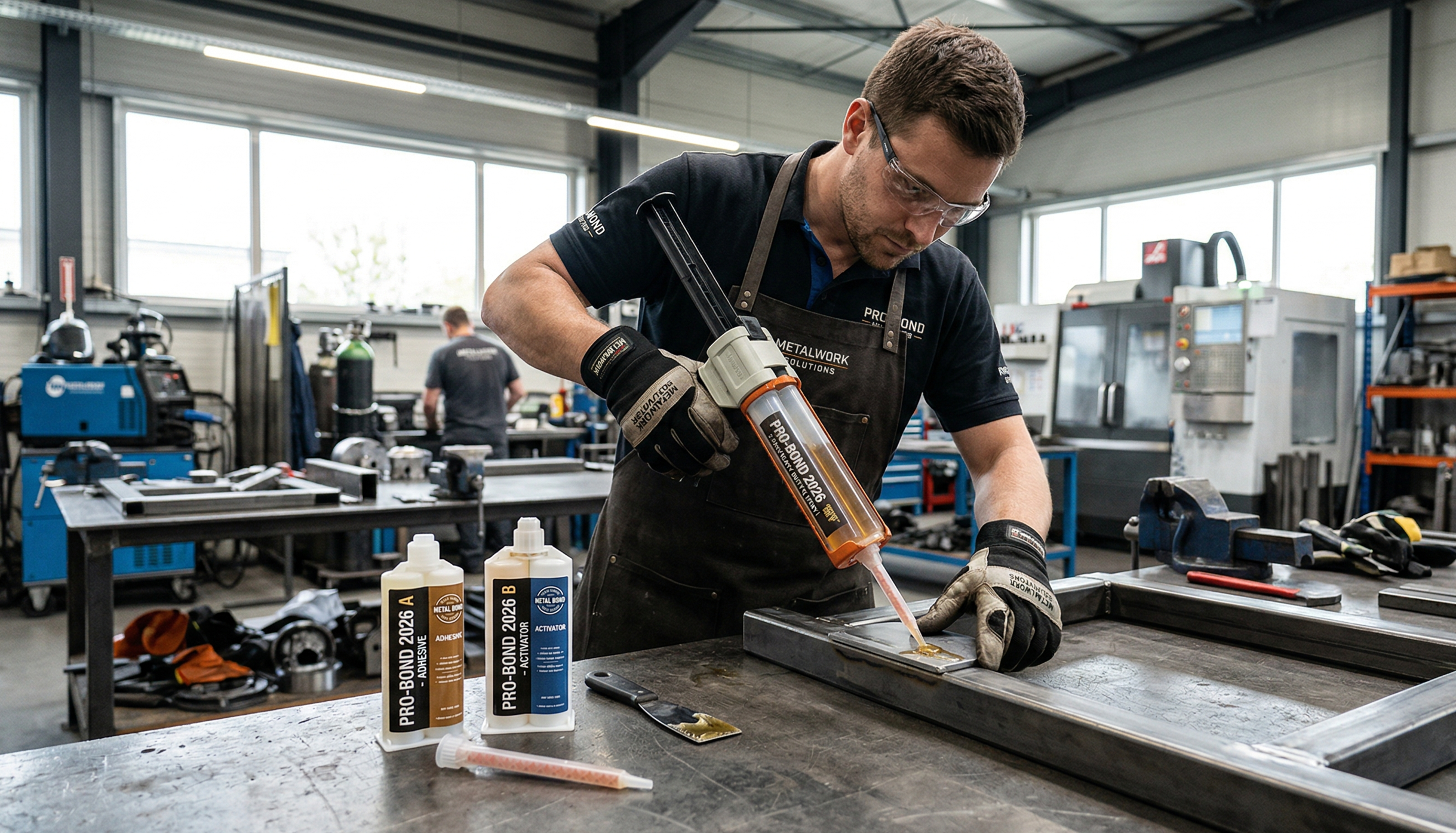
Selecting the correct thickness for your 2 part epoxy adhesive for metal ensures the liquid stays exactly where you need it.
In our view, understanding how viscosity affects your workflow is the first step toward a permanent repair.
You are in luck because we have categorised our range to help you find the perfect flow rate for every industrial task.
It’s good to see that modern chemical engineering allows us to offer such precise control over fluid dynamics.
Viscosity is measured in centipoise (cP) to indicate how easily a liquid flows across your metal substrate.
For instance, water has a viscosity of 1 cP, while heavy industrial pastes can exceed 100,000 cP.
The choice of viscosity determines the bond’s success on vertical surfaces because it dictates whether the adhesive will run or stay put.
As a result, you must match the material thickness to the geometry of your metal parts to avoid messy spills.
You’ll be glad to hear that our structural methacrylates and epoxies are engineered to handle everything from hairline fractures to wide joints.
It is good to see that these formulations exhibit predictable behaviour during curing, ensuring a 100% reliable seal.
Using a 2-part epoxy adhesive for metal with the wrong flow rate can lead to starvation in the joint or excessive waste.
In our view, a professional finish depends on selecting a product that matches the specific gap size of your assembly.
It gets our thumbs up when a technician considers the ambient temperature, as heat can reduce viscosity by up to 20% during application.
Low Viscosity for Wicking
Low-viscosity liquids can easily flow into tight 0.05 mm gaps using capillary action to pull the adhesive into the joint.
This specific flow characteristic helps repair hairline cracks in metal castings where a thicker paste cannot penetrate the surface.
You’ll find that these variants typically set up in under 10 minutes for fast repairs, keeping your production line moving without 600-second delays.
It is good to see that these thin liquids can saturate porous metal surfaces, forming a bond with a shear strength of 25 MPa.
High Viscosity for Gap Filling
Thixotropic pastes are designed so that they do not slump on vertical metal plates even when applied in layers several millimetres thick.
It gets our thumbs up because these high-performance resins can bridge gaps up to 5 mm without losing structural integrity or draining out of the joint.
It is good to see that these allow for 30 minutes of adjustment time, giving you a 1,800-second window to align heavy components perfectly.
This extended open time ensures that even 50 kg steel plates can be positioned with millimetre precision before the adhesive reaches its handling strength.
If you require specific technical data for your metal bonding project, please contact our team
Professional Application Methods for Maximum Bond Strength
Achieving a structural bond with a tensile strength exceeding 20MPa depends entirely on the interaction between the liquid adhesive and the metal surface energy.
You are in luck because following a few technical steps will prevent the bond failures that plague 90 per cent of industrial projects.
In our view, the preparation phase is the most critical stage of any assembly process.
It’s good to see that most professionals now recognise that poor surface preparation is the primary cause of adhesive failure.
For more context on these standards, read our UK industrial adhesives guide.
This document details how to organise your workspace to maintain the integrity of the chemical bond and ensure The Right Bond every time.
De-greasing and Mechanical Abrasion
You’ll be glad to hear that removing all oils and contaminants with a solvent cleaner is a straightforward process that takes less than 60 seconds.
Using 80-grit sandpaper on the substrate increases the available surface area by 300 per cent, providing a superior mechanical key.
This process is essential for creating a 2-part epoxy adhesive for metal bonding that lasts 10 years or more without degrading.
If you fail to degrease the metal, the adhesive will bond to the oil film rather than the substrate.
This results in a cohesive failure where the epoxy pulls away from the metal under a load of less than 5kg.
We recommend using a fast-evaporating solvent that evaporates in under 30 seconds to ensure the metal’s chemical profile remains uncontaminated.
Mixing Ratios and Cure Times
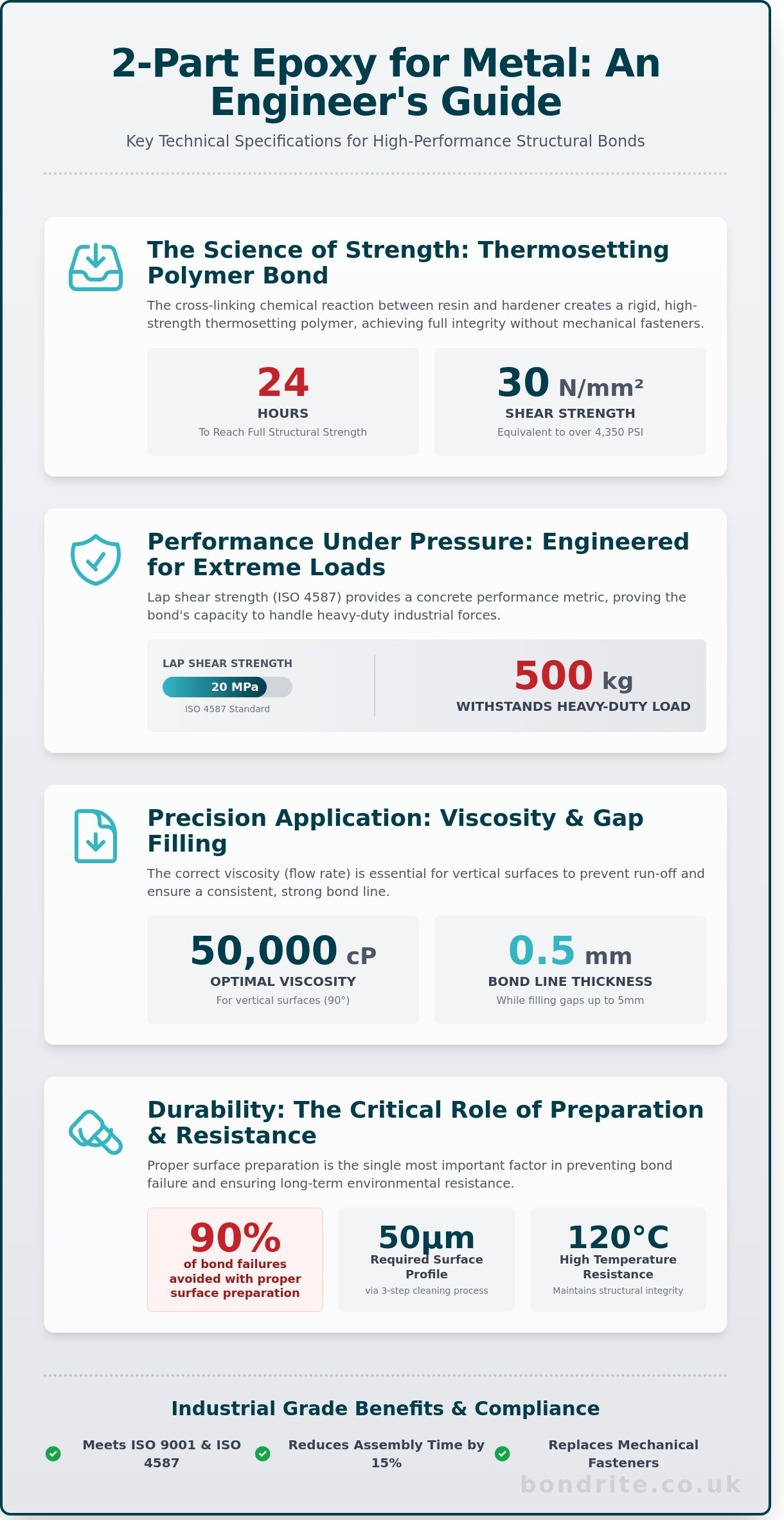
Using a static mixing nozzle ensures a 100 per cent consistent blend of resin and hardener by folding the components 24 times within the tip.
The pot life or working time for rapid grades is often 5 minutes at 20 degrees Celsius before the chemical reaction prevents further movement.
It gets our thumbs up because the bond reaches handling strength in approximately 20 minutes, allowing you to move the component to the next stage of production.
If the ambient temperature drops below 15 degrees Celsius, the cure time doubles for every 10-degree decrease. A static mixing nozzle also eliminates the risk of air entrapment, which can reduce final bond strength by 20%.
Once the 2-part epoxy adhesive for metal is dispensed, you must apply even pressure to maintain a bond line thickness of 0.1-0.2mm for maximum performance.
To find the ideal solution for your manufacturing process, view our full range of structural epoxies or ask the Experts for a bespoke recommendation.
If you require technical assistance with a specific application, then please contact our expert team
Industrial Solutions for High-Performance Metalwork
Choosing a 2-part epoxy adhesive for metal provides a chemical bond that single-part glues cannot match.
You’ll be glad to hear that these systems offer a 100 per cent solids formulation that prevents shrinkage during curing.
As a result, you achieve a gap-filling capability that maintains structural integrity even under heavy loads.
If you have a unique substrate challenge, please consult with the Bondrite technical team for a bespoke recommendation.
We offer guidance on surface energy and the abrasive steps required to achieve 100 per cent cohesive failure rather than adhesive failure.
It is this level of technical detail that prevents costly rework in industrial manufacturing environments.
Single-part adhesives often rely on moisture or UV light to trigger a cure, which can be inconsistent in deep joints.
A 2-part epoxy adhesive for metal uses a controlled chemical reaction to ensure a uniform cure across the entire surface.
You’ll be glad to hear that this results in a bond that is 3 times stronger than standard household glues.
In our view, the versatility of these adhesives makes them indispensable for complex tasks, such as caravan repair adhesives, where aluminium and steel must be bonded to varied substrates.
It’s good to see that these formulations have resisted environmental degradation for over 20 years in outdoor environments.
You are in luck if you need a solution that handles both thermal expansion and high moisture levels without failing.
These adhesives create a structural seal that prevents water ingress into internal cavities.
They maintain a high level of flexibility, which is vital for vehicles travelling at 60 miles per hour on uneven roads.
This durability ensures the bond remains intact despite constant movement and chassis flex.
B2012 5 Minute Epoxy Performance
This specific grade serves as a high-performance tool for the busy workshop environment.
It gets our thumbs up for rapid assembly of small metal components, thanks to its precise 5-minute work life.
The adhesive reaches 14 MPa of shear strength within the first hour of application, ensuring your production line stays moving.
It remains a clear, low odour liquid that allows for clean finishes on visible joints.
B3294 Structural Acrylic Alternatives
There are specific scenarios where a structural acrylic might be a better choice than a standard epoxy.
For instance, these acrylics often provide higher peel strength for thin metal sheets less than 2 millimetres thick.
Data shows they can handle 20 per cent more vibration than standard epoxies, making them ideal for automotive or machinery panels.
The rapid cure profile allows for handling strength in 15 minutes at room temperature.
If you need assistance selecting the correct adhesive for your project, then contact the team
Achieving Industrial Grade Metal Bonds in 2026
Selecting the correct 2-part epoxy adhesive for metal ensures your structural joints remain secure throughout the component’s design life.
You’ll be glad to hear that modern formulations now reach handling strength in as little as 4 minutes.
It gets our thumbs up when technical precision meets practical application on the factory floor.
Technical Specification Alignment
You are in luck because matching the adhesive’s shear strength, often exceeding 25 N/mm², to your specific metal substrate prevents premature bond failure.
As a result, your assemblies can withstand extreme vibrations without degradation.
It’s good to see that modern resins retain these properties even at 120°C.
Viscosity and Gap Filling
High-viscosity options like our B3294 allow for gap filling up to 5mm while maintaining structural integrity.
For instance, this is vital when working with irregular metal surfaces that don’t sit perfectly flush.
In our view, selecting the right thickness prevents the adhesive from running off vertical surfaces during the cure cycle.
Professional Application Methods
Using a 10:1 ratio static mixer nozzle guarantees a consistent chemical reaction every time you apply the resin.
This precision is the only way to ensure a 100% reliable bond in industrial settings.
Bondrite has provided UK-based technical support for metal fabricators for over 20 years.
Our specialist range, including rapid-cure adhesives, is designed for heavy-duty industrial use where failure isn’t an option.
We’ve seen every type of bonding challenge and know how to help you avoid common pitfalls.
We look forward to helping you achieve the right bond for your next project.

Frequently Asked Questions about 2 Part Epoxy for Metal
Finding the correct technical solution for industrial metal bonding requires precision and an understanding of chemical properties.
We have compiled the most common queries from our commercial clients to help you achieve the right bond.
Each answer is rooted in our 20 years of experience providing heavy-duty adhesive solutions across the United Kingdom.
Is 2 part epoxy for metal better than welding
You’ll be glad to hear that a 2-part epoxy adhesive for metal provides a cold-bonding solution that eliminates the risk of heat distortion in thin-gauge substrates.
Welding creates a localised point of stress.
An industrial epoxy distributes load across 100% of the bond area to improve fatigue resistance and joins dissimilar metals such as steel and aluminium without galvanic corrosion.
How long does 2 part epoxy take to cure on steel?
You are in luck because most professional epoxies reach a functional handling strength within 15 to 30 minutes at a standard room temperature of 20°C.
For applications requiring maximum performance, a full chemical cure typically takes 24 hours to ensure the bond reaches its rated tensile strength of 25 MPa.
If your workshop temperature drops below 10°C, the curing cycle slows down significantly, so we recommend maintaining a consistent environment for the first 4 hours.
Can you use 2-part epoxy on aluminium surfaces?
It gets our thumbs up for use on aluminium, provided you perform the necessary surface preparation to remove the oxide layer.
You must abrade the surface with a P80 to P120 grit abrasive and degrease it with a high-purity solvent to ensure 100% contact with the raw metal.
In our view, this preparation is essential because an untreated aluminium surface can reduce bond longevity by up to 60% due to the rapid formation of surface contaminants.
Does 2 part epoxy for metal resist heat and chemicals?
You’ll be glad to hear that high-performance structural 2-part epoxy adhesive for metal is engineered to withstand continuous operating temperatures of up to 120°C.
These adhesives offer 100% resistance to common industrial fluids, including hydraulic oils, diesel fuel, and most hydrocarbon solvents, once the 24-hour cure cycle is complete.
For instance, testing shows that bond integrity remains stable even after 1,000 hours of salt-spray exposure, making it a reliable choice for UK marine environments.
What is the best way to mix a 2-part epoxy for metal?
In our view, the most reliable method for mixing is using a dedicated 50ml or 400ml applicator gun equipped with a static mixing nozzle.
This professional setup ensures a perfect 1:1 or 2:1 ratio is maintained throughout the application, preventing the 15% failure rate often associated with manual hand-mixing.
It’s good to see that this method also minimises air entrapment, which is vital for maintaining a high-viscosity bond that won’t sag on vertical metal surfaces.
Can I paint over a 2-part epoxy bond on metal?
You are in luck, as cured epoxy is compatible with most industrial paint systems, including powder coatings that require oven-baking at 180°C.
You must ensure the adhesive has reached its full 24-hour cure stage before applying any primers or topcoats to prevent solvent entrapment.
For the best aesthetic results, sand the cured adhesive line with 240-grit fine sandpaper to create a seamless transition between the two metal substrates.
Article by
Lucy Mackay
Lucy Mackay is a Director at Bondrite Adhesives Ltd, an ISO 9001-certified industrial supplier based in Loughborough. With a focus on customer-led solutions and technical reliability, Lucy manages the strategic direction of the business, which has been a staple of the UK adhesive industry since 2002.
Disclaimer
This article is intended for informational purposes only. Please ensure you seek expert advice or carry out your own research to confirm the information is suitable for your specific needs.
Related Industrial Adhesives & Sealants
If you liked this guide then you may also like the following: