
Selecting the wrong viscosity for an industrial assembly isn’t a minor oversight; it’s a direct route to production failure and wasted material. Bond integrity is non-negotiable in professional environments. You likely recognise the frustration of an adhesive failing under environmental stress or the inefficiency of inconsistent cure speeds whilst working with varied substrates. It’s a common challenge in sectors like electronics and healthcare, where the global cyanoacrylate market is projected to reach 3.98 billion dollars by 2034.
This guide provides the technical clarity you need to handle b2001 ethyl cyanoacrylate with confidence, ensuring you achieve permanent, high-strength bonds that meet rigorous professional standards. If you select the appropriate viscosity for your substrate, then you can achieve a bond that resists significant environmental stressors. We’ll examine how to identify the correct CA grade for your specific materials, how to avoid common application errors, and the best methods to optimise your production through faster setting times. By the end of this article, you’ll have the knowledge to transform your bonding process from a variable risk into a controlled, reliable outcome.
If you require specific advice on adhesive selection for your assembly line, please speak with our technical team for assistance.
Key Takeaways
- Identify the specific performance characteristics of b2001 ethyl cyanoacrylate to ensure rapid and high strength bonds in professional settings.
- Understand how cure speeds vary across different materials to maintain maximum efficiency on your production line.
- Assess the compatibility of your substrates, including ABS and Polycarbonate, to guarantee the integrity of the final assembly.
- Select the appropriate viscosity grade for your process by comparing medium viscosity liquids against low viscosity wicking agents.
- Implement precise surface preparation steps with industrial cleaners to establish a reliable foundation for permanent adhesion.
Before selecting your adhesive, you may wish to speak with our technical specialists to ensure a perfect match for your application.
Understanding B2001 Ethyl Cyanoacrylate and its Industrial Role
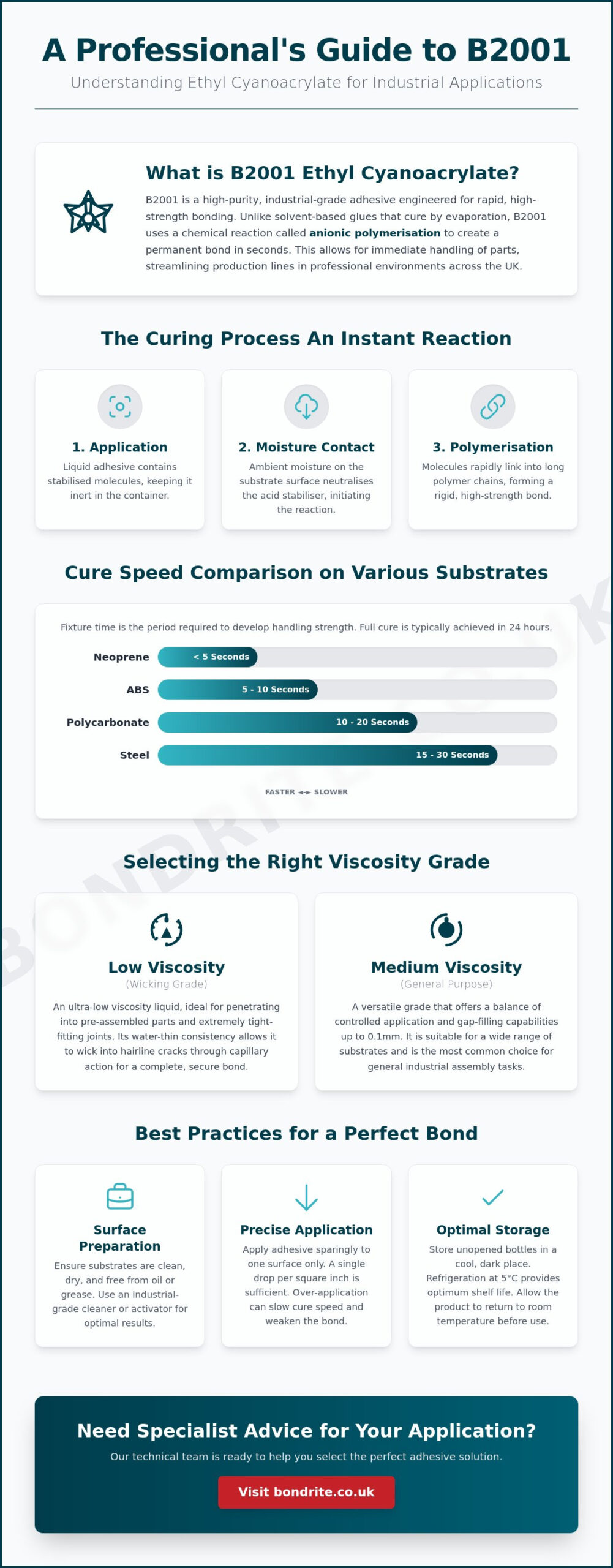
B2001 ethyl cyanoacrylate is a high-purity adhesive engineered specifically for rapid bonding in professional manufacturing environments. It represents a significant departure from standard solvent-based glues that rely on evaporation to form a bond. Instead, this industrial-grade adhesive utilises a process known as anionic polymerisation to create a near-instantaneous, high-strength connection between substrates. This chemical reaction allows for rapid handling strength, making it an essential component for streamlined assembly processes.
Within the UK manufacturing sector, B2001 has become a recognised standard due to its precise balance of setting speed and shear strength. Professional grades offer a level of consistency that consumer-level alternatives cannot match. This is critical for maintaining quality control in high-volume production cycles where even a minor deviation in cure time can disrupt an entire assembly line. Industrial formulations are manufactured to tighter tolerances, ensuring that the viscosity and reactivity remain stable throughout the shelf life of the product.
To better understand the mechanics of instant bonding solutions, watch this technical overview:
The Chemistry of Ethyl Cyanoacrylate
The curing mechanism of Understanding B2001 Ethyl Cyanoacrylate is triggered by the presence of weak base moisture, typically found on the surface of most substrates. In the bottle, the liquid is kept stable by acidic inhibitors that prevent the molecules from linking together. When applied to a surface, the ambient moisture neutralises these stabilisers, initiating a rapid chain reaction. This results in a long polymer chain structure that provides the rigid, durable bond characteristic of industrial cyanoacrylates. Because the reaction happens at the molecular level, it creates an incredibly tight interface between the two parts.
Why B2001 is a Specialist Choice for UK Industry
Whilst methyl-based cyanoacrylates are often restricted to metal-on-metal applications, B2001 offers superior versatility across diverse materials. It is frequently specified in the electronics, automotive, and medical device sectors because it bonds effectively to various thermoplastics, elastomers, and alloys. This reliability is essential for engineers who require predictable performance without the risk of bond failure under mechanical stress. If you are working with specific materials, you may find our range of cyanoacrylate superglue adhesives suitable for your particular assembly requirements. Using a specialist grade ensures that the bond remains durable amongst fluctuating temperatures and vibrations commonly found in industrial environments.
If you require a full technical data sheet for your safety files, please contact our adhesive team for assistance.
Technical Properties and Performance Benefits of B2001
Engineering a successful assembly requires a precise understanding of the mechanical capabilities of b2001 ethyl cyanoacrylate. This grade is specifically formulated to provide a high-strength bond whilst maintaining the rapid fixture times required for modern production lines. A deeper understanding of the Technical Properties of B2001 reveals why this ester is favoured for its rapid polymerisation and high tensile strength. Unlike standard adhesives, it achieves a significant percentage of its ultimate strength within seconds of application, allowing for immediate handling of parts without the need for complex clamping systems.
B2001 is a medium-viscosity adhesive, typically measured around 100 centipoise. This allows for a controlled application that balances surface wetting with gap-filling capability. It can effectively bridge gaps up to 0.15mm, making it suitable for parts with slightly irregular tolerances. If your application involves larger gaps or porous materials, you should consider the specific viscosity requirements of your process to avoid product waste. For projects involving plastic components, you can find specialised solutions within our cyanoacrylate superglue adhesives range to ensure optimal material compatibility.
Cure Speeds and Bond Strength
Fixture times for b2001 ethyl cyanoacrylate are highly dependent on the substrate material and surface energy. For nitrile rubber and EPDM, fixture strength is often achieved in as little as 3 to 10 seconds. Plastics like ABS and Polycarbonate typically require 10 to 20 seconds depending on the ambient conditions. It’s vital to distinguish between fixture time and full cure time. Whilst parts can be handled quickly, the bond continues to develop for several hours as the polymer chains cross-link. Full chemical and mechanical resistance is usually reached after 24 hours at room temperature. Once fully cured, the shear strength on grit-blasted steel can exceed 20 N/mm², and on many plastics, the bond strength often exceeds the structural integrity of the substrate itself.
Environmental and Temperature Resistance
The operational temperature range for B2001 is typically between -55°C and +82°C. Performance remains stable within this window, though prolonged exposure to the upper limits can lead to a gradual reduction in bond strength over time. Humidity also plays a critical role in the curing process. A relative humidity of 40% to 60% is ideal for a consistent reaction. If the environment is too dry, the cure will slow down; if it’s too damp, you may experience “blooming,” where a white powder forms around the bond line due to rapid vapour polymerisation. If you are unsure which grade suits your specific workshop environment, please get in touch with our technical advisors for a performance assessment. B2001 also shows excellent resistance to common industrial chemicals, including petrol, paraffin, and various oils, ensuring long-term durability in mechanical applications.
For specific advice on difficult to bond materials, you can get in touch with our experts for a technical consultation.
Material Compatibility and Substrate Selection for B2001
The success of an industrial bond depends heavily on the interaction between the adhesive and the substrate surface. B2001 ethyl cyanoacrylate is engineered to perform across a broad spectrum of materials, but its behaviour is influenced by the surface energy of the parts being joined. Whilst it provides exceptional results on many common materials, certain substrates require specific preparation or the use of primers to achieve the necessary shear strength. Understanding these material interactions is the first step in preventing adhesive failure under operational stress.
In high-volume manufacturing, consistency is paramount. B2001 is often selected for its ability to bond dissimilar materials, such as a rubber seal to a plastic housing, without the need for complex mechanical fasteners. However, if the surface energy of the material is too low, the liquid adhesive will bead up rather than wetting the surface. This prevents the anionic polymerisation process from creating a continuous bond line. Following Professional Application and Storage Best Practices is essential when handling these chemicals to ensure both bond integrity and workplace safety.
Bonding Plastics and Rubbers
B2001 delivers its best performance on high surface energy thermoplastics. The following materials are particularly well-suited for this grade:
- ABS and Polycarbonate
- PVC and Polystyrene
- Nitrile and EPDM Rubbers
When bonding flexible rubbers, the medium viscosity of this grade ensures it stays in place during the fixture period. You can explore our wider range of plastic adhesives if you’re working with complex assemblies that involve large surface areas. For low surface energy plastics like Polypropylene or Polyethylene, a polyolefin primer must be applied first to create a bondable surface. Without this chemical bridge, the b2001 ethyl cyanoacrylate won’t be able to form a structural link with the polymer chains of the plastic.
Metalwork and Porous Surfaces
Bonding metals such as steel or aluminium requires the removal of surface oxides and oils. If the metal isn’t properly degreased, the bond will only be as strong as the contaminant layer. Once cleaned, B2001 provides a high-strength connection that resists vibration and environmental degradation. Compare this grade against other cyanoacrylate superglue adhesives when dealing with porous surfaces. Because B2001 has a medium viscosity, it’s often absorbed by highly porous materials like softwoods or fabrics, which can lead to a starved joint. In these specific scenarios, a gel-based formula or a different adhesive technology may be more effective to prevent the product from wicking away from the bond line.
To ensure you select the correct viscosity for your production line, please reach out to our technical department today.
A Buying Guide for Selecting the Right Viscosity Grade
Selecting the correct viscosity grade is a fundamental step in optimising an industrial bonding process. While we’ve already discussed material compatibility, the physical flow characteristics of the adhesive determine how effectively it stays within the joint. b2001 ethyl cyanoacrylate is a medium viscosity formulation, typically measured around 100 centipoise. This differs significantly from low viscosity wicking grades which are designed to penetrate pre-assembled parts through capillary action. If you use a wicking grade on a loose-fitting joint, the adhesive will likely run out of the bond area, leading to insufficient coverage and potential contamination of surrounding components.
Your chosen application method should also dictate your viscosity choice. Manual dispensing via a precision nozzle requires a stable liquid that doesn’t drip easily. In contrast, automated pneumatic applicators can be calibrated for various thicknesses, but medium viscosity grades like B2001 often provide the most consistent shot size. When evaluating suppliers for your production line, you should use the following checklist:
- Does the supplier provide technical data on viscosity stability over the product shelf life?
- Is the adhesive batch-tested to ensure consistent fixture speeds across every bottle?
- Can the supplier offer specific guidance on the maximum gap-filling capability of the grade?
- Is there direct access to technical specialists for troubleshooting bond failures?
Viscosity Considerations for Gap Filling
B2001 serves as a versatile middle ground for general industrial assembly. Its 100 cPs thickness allows it to bridge gaps up to 0.15mm without excessive migration. If an adhesive is too thin for the application, it may be absorbed into the substrate or fail to fill the tolerances between parts. Proper viscosity ensures the adhesive spreads evenly across the entire surface area, which is vital for achieving high shear strengths. If you’re unsure about the tolerances of your components, please consult our technical team for a precise grade recommendation.
Comparing B2001 with Specialty CA Grades
While b2001 ethyl cyanoacrylate is a standard for many UK manufacturers, specialty applications might require different properties. Toughened grades are often specified for high-impact environments where the bond must withstand significant shock. Similarly, low-blooming or low-odour grades are essential for aesthetic assemblies where the white frosting effect must be avoided. For professionals seeking alternatives in structural applications, our range of plastic adhesives offers diverse solutions beyond standard cyanoacrylates. Selecting the right grade involves balancing these specialty needs against the core performance requirements of your specific production cycle.
If you need guidance on safe handling or application equipment, please consult our specialist team for support.
Best Practices for Professional Application and Storage
Achieving a high-performance bond with b2001 ethyl cyanoacrylate requires more than just selecting the correct grade; it demands a disciplined approach to application and workshop environment control. In an industrial setting, the difference between a structural failure and a successful assembly often lies in the minute details of surface preparation and adhesive volume. Because this adhesive cures through an anionic reaction triggered by surface moisture, any deviation from established protocols can lead to inconsistent fixture times or reduced shear strength.
Surface Preparation for Maximum Adhesion
Surface preparation remains the single most important variable in adhesive performance. You must ensure all substrates are entirely free from oils, grease, and mould release agents. Even a microscopic layer of contaminant can prevent the b2001 ethyl cyanoacrylate from making direct contact with the material’s molecular structure. Using a high-quality industrial solvent cleaner is the standard method for degreasing. Whilst a smooth surface is often easier to clean, a slight increase in surface roughness through mechanical abrasion can significantly improve the mechanical key of the bond. For a deeper analysis of preparation techniques, you should refer to our expert guide to industrial adhesives, which details the standards required for high-performance manufacturing.
Safe Handling and Storage Protocols
Over-application is a frequent cause of technical failure in CA bonding. A common rule of thumb is that one drop of adhesive covers approximately one square inch of surface area. If you apply too much, the curing process slows down significantly, and you risk “blooming,” where the excess monomer evaporates and settles as a white powder around the joint. To prevent the nozzle from clogging, never touch the tip against the substrate and always wipe the nozzle clean with a lint-free cloth before replacing the cap.
Storage protocols are equally vital for maintaining product integrity. You should store unopened bottles in a cool, dry environment, ideally between 2°C and 8°C, to maximise shelf life. However, if you choose to refrigerate the adhesive, it’s essential to let the bottle reach room temperature before opening. Opening a cold bottle allows ambient moisture to condense inside, which will cause the liquid to polymerise in the container.
Finally, safety must be a priority. Ethyl cyanoacrylate is a known irritant to the respiratory tract. You should always ensure adequate ventilation to keep workplace exposure below the 0.2 ppm Threshold Limit Value (TLV) established by the ACGIH. Always wear nitrile gloves and safety glasses; if skin bonding occurs, don’t force the parts apart. Instead, soak the area in warm soapy water or use a specialised CA debonder to gently release the bond. Maintaining these standards ensures that your bonding process remains both safe and technically sound.
To ensure your assembly process uses the most effective bonding technology, please contact our technical advisers for a professional consultation.
Optimising Your Industrial Bonding Process
Achieving high-performance results in industrial assembly requires more than just a fast-acting adhesive. It necessitates the precise application of technical knowledge regarding substrate compatibility and environmental resistance. By selecting the correct viscosity and following rigorous surface preparation protocols, you ensure that b2001 ethyl cyanoacrylate provides a permanent, structural bond that withstands significant operational stresses. If you maintain these professional standards, then your assembly process will remain both safe and technically sound. This methodical approach reduces product waste and prevents costly technical failures.
Since 2000, Bondrite has operated as an established UK specialist, providing high-performance industrial grade formulations to manufacturers across the country. Our seasoned industrial advisers offer the technical support needed to navigate complex bonding challenges, prioritising the integrity of your results. We’ve developed precision-engineered solutions that integrate seamlessly into your existing production cycles. It’s our goal to ensure long-term durability and safety in every application. We look forward to helping you achieve the highest standards in your assembly and repair operations.
Frequently Asked Questions
How long does B2001 ethyl cyanoacrylate take to set?
B2001 ethyl cyanoacrylate typically achieves fixture strength within 3 to 20 seconds depending on the substrate material. Rubbers such as Nitrile and EPDM bond almost instantly, whereas thermoplastics like ABS may require up to 20 seconds to reach handling strength. It is important to wait 24 hours for the adhesive to reach its full mechanical and chemical resistance before subjecting the bond to maximum operational loads.
Can I use B2001 on all types of plastic?
This grade is highly effective on most common industrial thermoplastics including PVC, ABS, and Polycarbonate. However, it will not bond low surface energy plastics such as Polypropylene or Polyethylene without the prior application of a polyolefin primer. If you are working with difficult substrates, you should verify the material type to determine if a surface activator or primer is necessary for a structural bond.
What is the shelf life of an unopened bottle of B2001?
The shelf life of an unopened bottle of b2001 ethyl cyanoacrylate is typically 12 months when stored in optimal conditions. To ensure the stability of the adhesive, you should keep the container in a cool, dry environment between 2°C and 8°C. Once the bottle is opened, the shelf life reduces as the product is exposed to ambient moisture, which eventually leads to thickening and polymerisation in the container.
Is B2001 ethyl cyanoacrylate waterproof once cured?
Cured ethyl cyanoacrylate exhibits good resistance to moisture and occasional water contact but it is not recommended for permanent immersion. Prolonged exposure to water or high humidity environments can eventually degrade the polymer chain, leading to a reduction in bond strength. For applications involving constant water exposure, you might consider alternative technologies like silicone sealants or structural epoxies from our professional range.
Do I need a primer when using B2001 on metal?
A primer is generally not required for bonding metals such as steel or aluminium provided the surfaces are thoroughly degreased. The adhesive bonds directly to the metal substrate once surface oxides and oils are removed. If the bond is subjected to high impacts or extreme temperature fluctuations, you should ensure the joint design accounts for the rigid nature of the cured cyanoacrylate.
How should I remove B2001 if it gets on the wrong surface?
You can remove uncured or cured adhesive using a specialised cyanoacrylate debonder or a solvent such as acetone. Apply the solvent to the affected area and allow it to soften the polymer before gently scraping the residue away. Because acetone can damage certain plastics and finished surfaces, you should always perform a small test on an inconspicuous area before proceeding with the full cleaning process.
What is the difference between B2001 and standard superglue?
B2001 is a high purity industrial grade adhesive that offers superior consistency and performance compared to consumer level superglues. It is manufactured to strict technical tolerances, ensuring predictable fixture times and viscosity across different batches. While retail products are often formulated for general household use, this professional grade is designed to meet the rigorous demands of high volume manufacturing and structural assembly in commercial environments.

Article by
Lucy Mackay
Lucy Mackay is a Director at Bondrite Adhesives Ltd, an ISO 9001-certified industrial supplier based in Loughborough. With a focus on customer-led solutions and technical reliability, Lucy manages the strategic direction of the business, which has been a staple of the UK adhesive industry since 2002.
Disclaimer
This article is intended for informational purposes only. Please ensure you seek expert advice or carry out your own research to confirm the information is suitable for your specific needs.
Related Industrial Adhesives & Sealants
If you liked this guide then you may also like the following: